Over 30,000 citizens of Pune are trained in Digital Literacy so far -; this includes 19,154 women, and 11,379 men.
Read More

Over 30,000 citizens of Pune are trained in Digital Literacy so far -; this includes 19,154 women, and 11,379 men.

The Kothrud-Karvenagar cluster trainings are a great culmination of pre-planning, teamwork and flawless execution. This is what the Sahyogis explain about the training process: “We all meet together before conducting any training so that we can pre-plan. We divide the sessions amongst ourselves and discuss. One day prior to the training, we check the training hall and arrange for the logistics. We even check the toilets and make sure that they are clean. We ensure a conducive environment for our participants (teachers) so that they feel comfortable and can concentrate on the training. Having a circular seating arrangement helps us to improve participation and audience connect. Our trainings are very participatory and the teachers really have a good time while learning. The most striking feature of our trainings is that even if we have divided the topics and conducted sessions accordingly, we all back each other during the question-answer sessions. When one of us is conducting a session, the other is a support for the presenter to help with logistics and the rest (two) of us who are free at that point note down our observations for that day’s training regarding what went well and what can be improved. Post the training, we discuss our observations and reflections. This helps us improve and deliver better every time.”
The Shikshak Sahyogi Dal comprises 50 “Teacher-Coaches” who are being trained intensively by PMC and Pune City Connect. In turn, they provide training and classroom support to over 1500 teachers across PMC schools.

Mangesh, a resident of Samrat Nagar, in Aundh, always aspired to become an entrepreneur and start a poultry farming business. His father is a farmer in Paud village and often found it difficult to make ends meet. Mangesh knew he had to support his family with an alternate source of income but his fears and lack of knowledge held him back.
On joining the Lighthouse program, he actively participated in the activities and was the first candidate to show an interest in a poultry course. He took the initiative and worked along with the Lighthouse Skilling Coordinator to find the appropriate course to his liking and successfully went on to complete a poultry business course through MITCON.
“The Lighthouse was committed to my dream and supported me throughout my journey. Although I was the very first student to aspire to poultry farming, the Lighthouse found a skilling organization that could help me pursue this. I could overcome my fears and skill myself to start a business of my own only because of the constant support and assistance I received from the team members.”- Mangesh
During his course, Mangesh gained basic information in the poultry farm domain. With technical knowledge and continuous help from the Lighthouse staff, Mangesh was able to connect with experts in the field to broaden his horizons. Mangesh is now set to begin his journey in the Poultry Business.
The Lighthouse program is a multi-disciplinary project, with a holistic approach to skill development and employment. It is designed to awaken deep and long-term aspirations, stemming from a sense of social belonging, and at the same time address skilling needs of young people from socio-economically vulnerable backgrounds.

Vaibhav Nimbalkar resides with his parents and his wife in Pune. Due to lack of education, Vaibhav had worked as a housekeeping staff for a hospital in Hadapsar, while his father is a labourer. Unable to support his family with the required financial assistance, he decided to enrol at the Lighthouse to improve on his skills for a better livelihood.
On successful completion of the Foundation course followed by counselling, Vaibhav decided to enrol for the Ac and Refrigerator Course.
He personally shared with the Lighthouse team that through the Foundation course he inculcated confidence and gauged a career path for himself. The foundation course activities helped him so much so that he successfully cracked the interviews with Blue Dart and Daikin Airconditioning Pvt Ltd. He is now working as an AC Technician with Daikin at 9000 pm.
Sustainable Livelihood: ‘Lighthouses of Pune’ is a multi-disciplinary project, with a holistic approach to skill development and employment. It is designed to awaken deep and long-term aspirations, stemming from a sense of social belonging, and at the same time address skilling needs of young people from socio-economically vulnerable backgrounds.

Mayur Kamble started his Lighthouse journey in August 2016. Though he had been employed in the past, he did not have a clear career trajectory. However, his energy, positive energy and motivation led him to complete his skilling in the Business Communication Business Facilitator course, after realizing his inclination towards the banking sector.
Mayur not only completed the course with flying colours, but also managed to be placed with a job at HDFC Data Processing. He has paid his success forward, by motivating his batch mates to apply for vacancies at his company. Mayur did not stop here. He has been resourceful in helping the Lighthouse with information about vacancies in the larger ecosystem.
He accompanied the Lighthouse staff to multiple organisations, to help source job vacancies – and was able to find over 100 vacancies! Due to his diligence and belief in the collective, 9 of the Lighthouse students have been placed in back office roles.
Mayur has emerged as a leader amongst the Lighthouse students, while also working at HDFC. He motivates his fellow team members to face their challenges – and is on the path to a long term, sustainable career.
Mayur’s journey with the Lighthouse and beyond is one of inspiration and belief.
Sustainable Livelihood: ‘Lighthouses of Pune’ is a multi-disciplinary project, with a holistic approach to skill development and employment. It is designed to awaken deep and long-term aspirations, stemming from a sense of social belonging, and at the same time address skilling needs of young people from socio-economically vulnerable backgrounds.
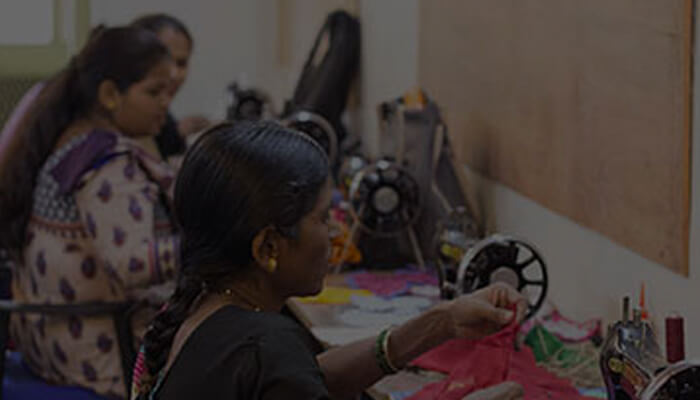
Seema runs a small tailoring business at home. After doing the course, she used YouTube to learn new dress and blouse designs. In no time, her customer base increased as she is able to offer contemporary designs. Moreover, she is able to charge Rs. 300 – Rs. 350 per blouse piece as compared to Rs. 250 prior to the course.
Digital Empowerment is the ability of an individual to leverage the internet to improve the quality of their day-today life. The four key components of the Digital Empowerment curriculum are:
Ability to search for information | Ability to utilize e-Services | Ability to undertake cashless transactions | Ability to participate in social media
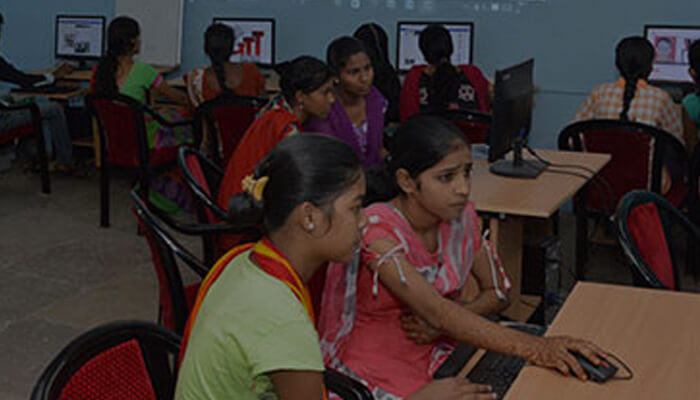
Madhavi, nutritionist at a PMC school, has a job of great responsibility. After the Digital Empowerment course, she not only started using the internet for mobile banking and ticket booking but also searches for new techniques and information related to nutrition, thus becoming more effective in her job.
Digital Empowerment is the ability of an individual to leverage the internet to improve the quality of their day-today life. The four key components of the Digital Empowerment curriculum are:
Ability to search for information | Ability to utilize e-Services | Ability to undertake cashless transactions | Ability to participate in social media

Vijaya Mahadik’s perfection, enthusiasm and investment stands out in the program. Here she shares her experience of teaching Saksham-
“As a part of planning my Saksham lessons, I thoroughly read the content and took my own notes. Thinking about the topic I wanted to take up in the class, I broke it down into subtopics. I thought about the objectives of my lesson, what I see my students doing in the lesson to achieve those objectives and the requisite material for the lesson. By preparing the material beforehand in sufficient quantity, I ensured that every student and group gets it. During the lesson, I observed that students really like the individual attention they are getting and I continued the practice even though it is a small act like glancing through each student’s notebook. Post the lesson, I reflected about what went well today and what I can do better tomorrow. During that time, Sahyogis had the additional responsibilities hence we could not do a whole group reflection, which I feel could have helped us more to understand about everyone’s experience. Teaching Saksham has helped me in understanding how this program would actually look like in the classroom, preparation a teacher should do for the lessons and post teaching reflections. This would support me in supporting the teachers in implementing Saksham.“
The Shikshak Sahyogi Dal comprises 50 “Teacher-Coaches” who are being trained intensively by PMC and Pune City Connect. In turn, they provide training and classroom support to over 1500 teachers across PMC schools.

Meet Mrs. Afreen Sheikh, a young and energetic Head Master of PMC School No. 22 who joined the school around the same time as the start of the SIP (School Improvement Project).
Her initial days as a school leader were difficult and she used to struggle to manage the school and the staff. In a candid conversation with the Academic Coordinator, she expressed a desire to improve her leadership skills and overcome her inhibitions. On a personal front, she wanted to become a great public speaker. Through her grit, dedication and passion for children’s education, there was a quick turnaround.
She applied what she learned at ISLI* workshops continuously. From being shortlisted in the top 100 Design For Change projects across the country in 2017 to engaging parents by using WhatsApp to resolving conflicts between staff members, her school has been a benchmark amongst the 15 SIP schools since a year now. She continues to push herself to be better and in turn improves the quality of education for her students.
Through the School Improvement Project, PMC and Pune City Connect are working with the Headmasters, Balwadi teachers (LKG & UKG), Teachers (classes I to VIII) and Social workers, in 15 PMC schools, in order to enable holistic school development.
* ISLI – India School Leadership Institute offers a 2 year city Fellowship programme for school leaders of government schools. Mrs. Sheikh has been a part of this programme.

Sahyogi Rohini Gaikwad has a keen eye for teacher-student interaction during classroom observations..